The Operational Excellence Matrix: Streamlining Internal Workflows to Drive Motor Carrier Profitability
The Foundation of a High-Performance Motor Carrier
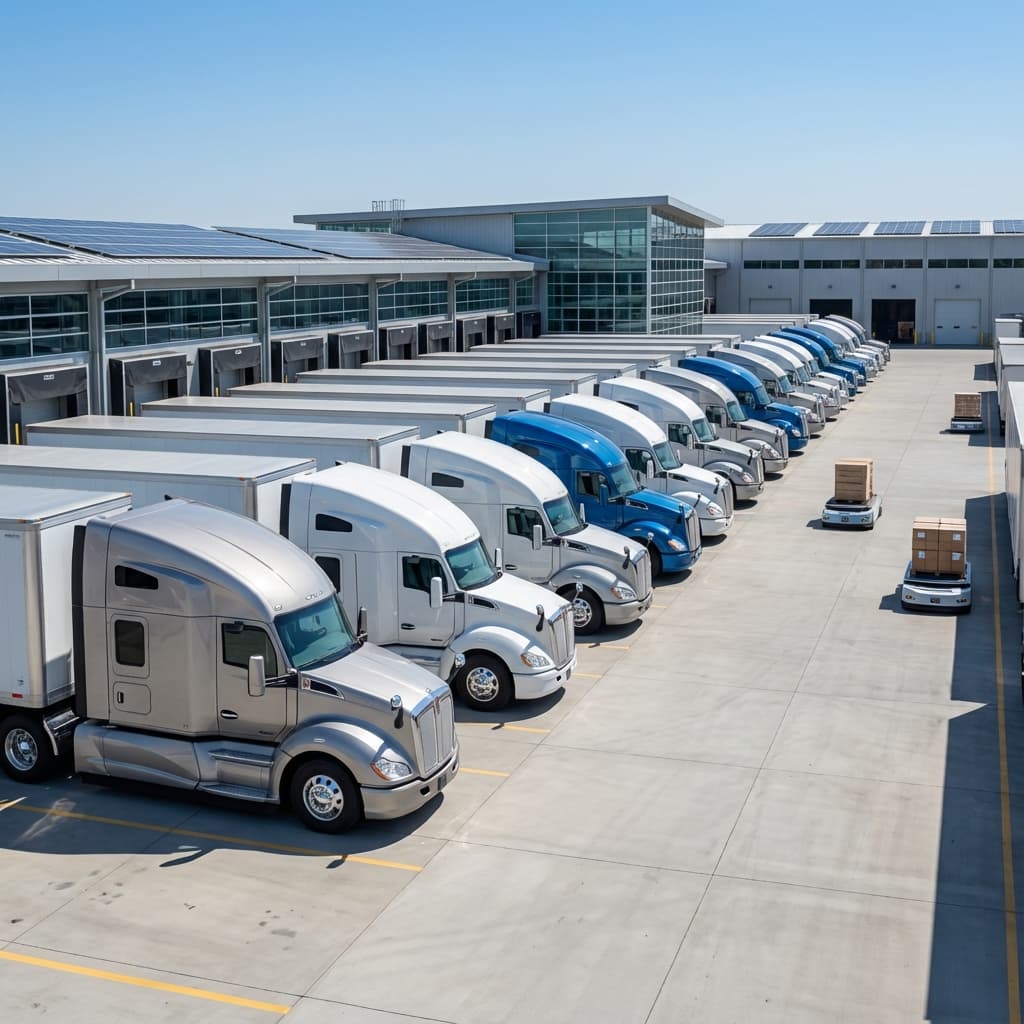
In the competitive world of trucking, profitability is often won or lost in the office, not just on the highway. While hauling freight is the core service, the operational infrastructure—the systems, workflows, and management strategies—dictates whether a carrier can scale sustainably or succumb to the pressures of rising costs. For the modern motor carrier, achieving operational excellence requires a shift from reactive firefighting to proactive, matrix-based management.
1. Synchronizing Dispatch and Billing for Cash Flow Velocity
One of the most significant leaks in a trucking business's profitability is the gap between delivery and payment. Operational excellence begins with streamlining the document lifecycle. By implementing mobile document capture and integrating it directly with your Transportation Management System (TMS), carriers can trigger invoices the moment a bill of lading is signed.
- Electronic Proof of Delivery (ePOD): Eliminates manual entry errors and speeds up the billing cycle.
- Automated Factoring Integration: If your business uses factoring, ensuring your TMS communicates directly with your factor can reduce administrative overhead by hours each week.
- Reduced DSO (Days Sales Outstanding): Faster billing improves liquidity, allowing you to reinvest in your fleet without relying on high-interest credit lines.
2. The Predictive Maintenance Protocol
Maintenance is often viewed as a necessary expense, but for an efficient fleet, it is a revenue protection strategy. A truck in the shop is a truck that isn't earning, yet it still incurs fixed insurance and permit costs. Shifting from a reactive "fix it when it breaks" model to a data-driven predictive model is essential for operational efficiency.
Leveraging telematics data to track engine hours, fuel burn, and fault codes allows fleet managers to schedule maintenance during planned downtime. This doesn't just prevent roadside breakdowns; it significantly improves your Compliance, Safety, Accountability (CSA) scores. A clean inspection history reduces the likelihood of DOT interventions and positions your company for more favorable insurance premiums during your next renewal.
3. Optimizing the Driver-Dispatch Feedback Loop
Human capital is your most expensive and valuable asset. Operational efficiency suffers when there is a disconnect between dispatch expectations and driver reality. High turnover rates are frequently driven by poor communication and inefficient routing that wastes a driver's hours of service (HOS).
Strategic load planning should account for more than just the rate-per-mile. It must consider driver home-time requirements and the reduction of deadhead miles. When drivers feel their time is respected through efficient scheduling, retention rates climb, reducing the massive operational cost associated with recruiting and onboarding new talent.
4. Data-Driven Asset Utilization
To scale a fleet, you must understand the true ROI of every asset. Operational excellence requires a deep dive into cost-per-mile (CPM) metrics. This includes not just fuel and driver wages, but the prorated cost of insurance, depreciation, and administrative overhead.
By analyzing which lanes and which specific trucks yield the highest net profit, motor carriers can make informed decisions about fleet expansion or contraction. Are your older units costing more in maintenance and fuel than a new lease payment would? A robust Operational Excellence Matrix provides the data to answer these questions with certainty.
The Bottom Line: Efficiency as a Competitive Advantage
For United Lanes Insurance partners, operational efficiency is more than just a way to increase margins—it is a way to build a resilient business profile. Well-managed carriers with documented workflows, rigorous maintenance schedules, and high driver retention are viewed as lower-risk entities by underwriters.
By focusing on the internal mechanics of your business today, you create the financial and operational stability required to dominate your niche in the freight market of tomorrow. Excellence is not a one-time event; it is the result of refined processes and continuous improvement.
Questions about
this topic?
Our specialists are ready to provide the personalized guidance you need for your specific situation.