Beyond the Bill of Lading: Strategic Financial Operations for Scalable Motor Carriers
The Intersection of Logistics and Finance
For many motor carriers, the focus remains primarily on the windshield—finding the next load, managing the next driver, and ensuring the next delivery. However, the most successful fleets are those that manage their business from the CFO’s desk as much as the dispatcher’s terminal. In an industry defined by thin margins and high capital intensity, strategic financial operations are the true engine of growth.
Mastering the Cash Flow Cycle
Cash flow is the lifeblood of a motor carrier, yet it is often the most volatile element of the operation. The gap between paying for fuel and driver wages and receiving payment from a broker or shipper can stretch from 30 to 90 days. Professional operators must move beyond reactive cash management to a proactive strategy.
Evaluating Financing Structures
While factoring is a common tool for immediate liquidity, it should be used strategically rather than as a permanent crutch. As your fleet scales, transitioning to Asset-Based Lending (ABL) or traditional lines of credit can significantly reduce your cost of capital. Reducing your cost of money by even 1-2% can result in tens of thousands of dollars in annual bottom-line savings for a mid-sized fleet.
- Analyze your 'Days Sales Outstanding' (DSO): Work to reduce the time between delivery and invoicing.
- Selective Factoring: Factor only high-risk or slow-paying accounts while maintaining traditional credit for anchor tenants.
- Build a 'Dry Powder' Fund: Maintain a cash reserve equivalent to 60 days of operating expenses to weather market downturns without relying on high-interest debt.
Strategic Asset Lifecycle Management
One of the most significant operational drains on a motor carrier is the Total Cost of Ownership (TCO) of the fleet. Growth is often hindered by holding onto equipment for too long, leading to skyrocketing maintenance costs and unplanned downtime.
The 'Sweet Spot' of Replacement
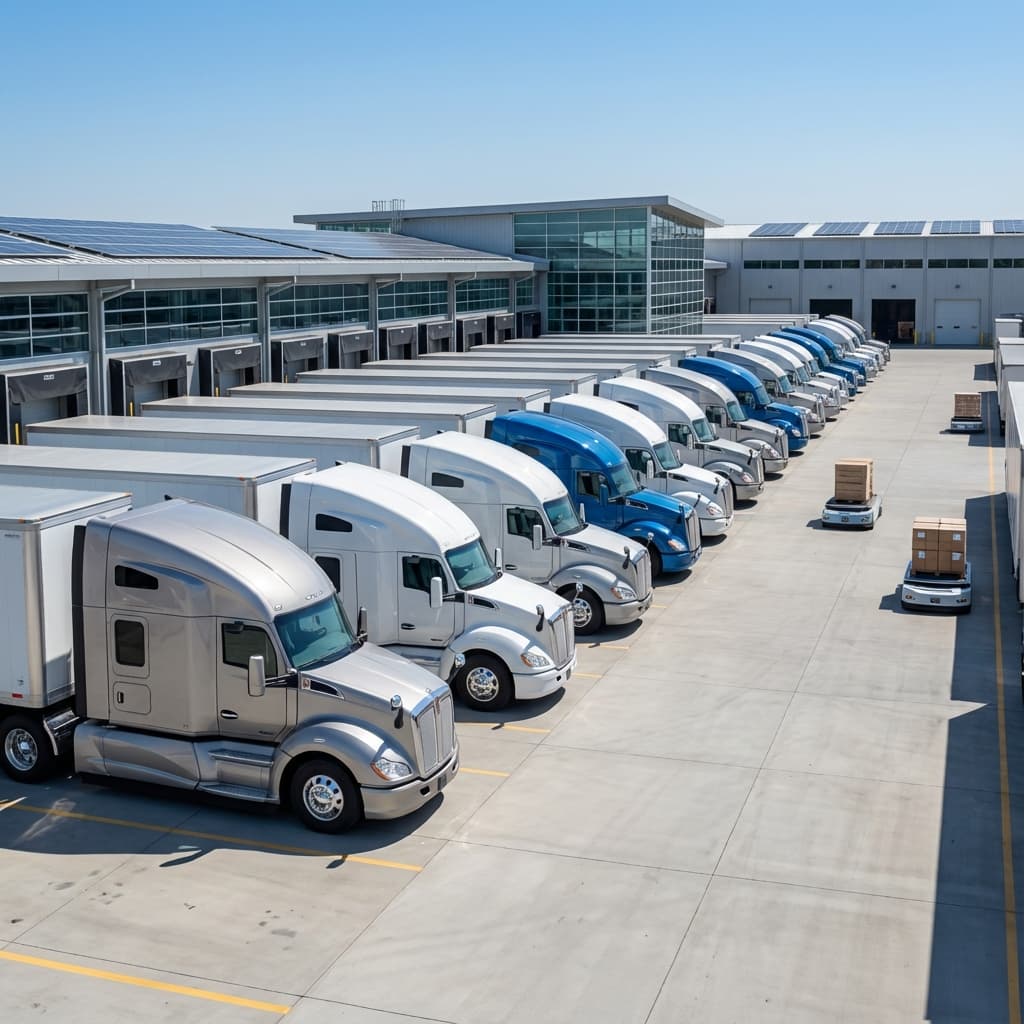
Modern fleet management requires identifying the precise moment when the depreciating value of a tractor and the rising cost of maintenance intersect. Operating a fleet with an average age of 3-4 years often yields higher net profitability than running older equipment, despite the higher monthly note. This is due to improved fuel economy, reduced repair costs, and higher driver retention.
Niche Diversification and Contract Stability
Relying solely on the spot market is a recipe for operational instability. Growth-minded carriers focus on building a balanced portfolio of freight. This involves a strategic mix of dedicated contract carriage and specialized niches (such as temperature-controlled, flatbed, or heavy haul) that command higher rates and offer more predictable volumes.
Operational efficiency increases when you can optimize for backhaul opportunities within your own network rather than hunting for random loads. This level of synchronization requires investing in robust Transportation Management Systems (TMS) that provide real-time data on lane density and revenue per mile.
Leveraging Data for Operational Efficiency
In the modern era, data is as critical as diesel. To improve your operating ratio, you must measure it relentlessly. Key performance indicators (KPIs) should be tracked weekly, not quarterly.
- Revenue per Power Unit: Identifying underperforming assets in real-time.
- Fuel Efficiency Benchmarking: Identifying driver behaviors or mechanical issues that are siphoning profits.
- Empty Mile Ratio: Minimizing non-revenue generating movement through better dispatch coordination.
The Strategic Connection: Operations and Risk
Finally, every operational decision impacts your risk profile. A carrier that invests in a younger fleet, better financial reserves, and sophisticated TMS software is inherently a more stable risk for insurers. By demonstrating operational integrity and financial resilience, you position your business to negotiate more favorable terms, ensuring that your insurance costs scale efficiently alongside your revenue.
At United Lanes Insurance, we understand that your business is more than a policy number—it is a complex operational machine. By focusing on these high-level financial and operational strategies, you aren't just moving freight; you are building a legacy.
Questions about
this topic?
Our specialists are ready to provide the personalized guidance you need for your specific situation.