The Agility Framework: Optimizing Revenue Velocity and Fleet Utilization for High-Growth Carriers
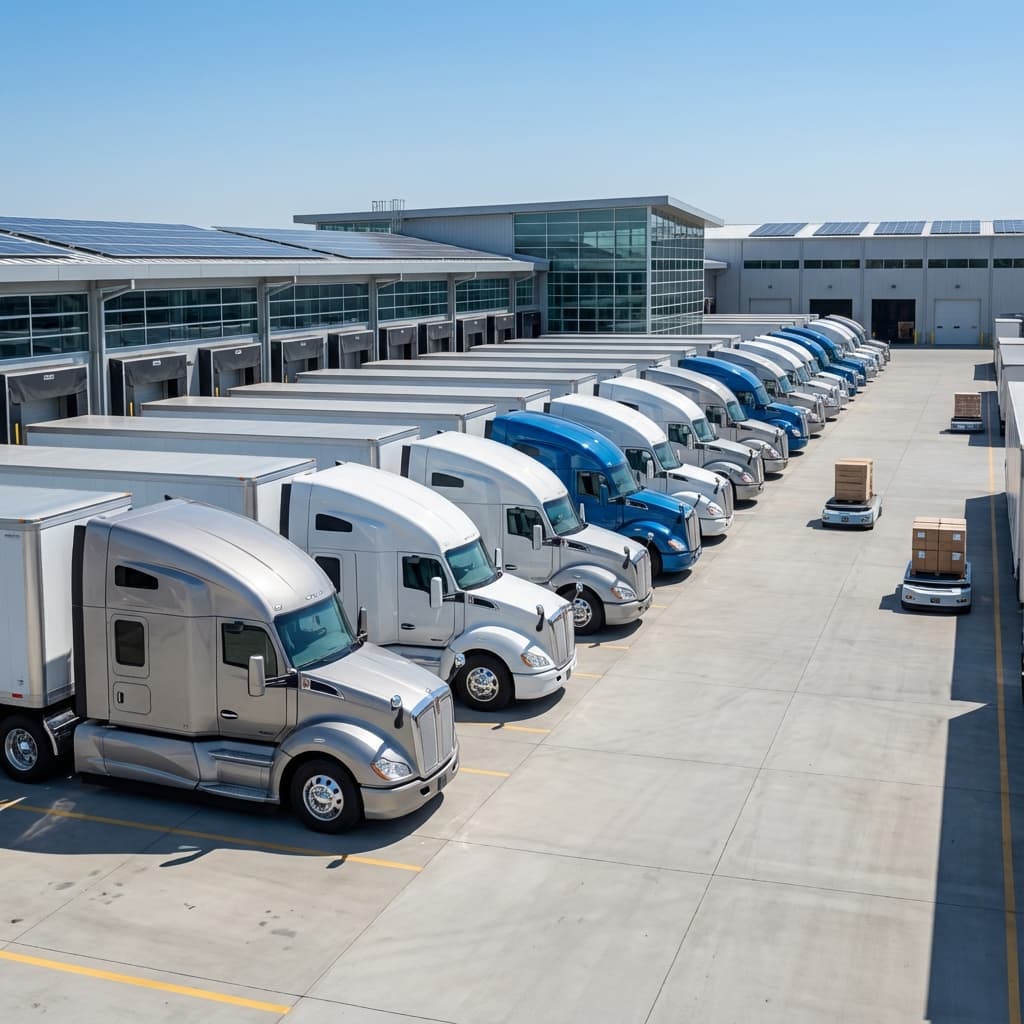
Beyond the Odometer: Redefining Fleet Efficiency
In the competitive landscape of modern logistics, the most successful motor carriers have shifted their focus from simply 'accumulating miles' to a more sophisticated metric: Revenue Velocity. This framework measures the speed at which an asset generates income relative to its operating costs. For fleet owners looking to scale, mastering this agility is the difference between a business that grows sustainably and one that collapses under its own overhead.
1. Maximizing Asset Utilization and Revenue Velocity
Revenue velocity is often hindered by excessive 'dwell time' and inefficient dispatching. To optimize your operations, you must treat every hour a truck sits idle as a direct hit to your bottom line. High-growth carriers utilize Advanced Load Planning to minimize deadhead miles and ensure that the next load is secured before the current one is delivered.
- Strategic Lane Density: Focus on lanes where your fleet can maintain a constant loop, reducing the time spent searching for backhauls.
- Dynamic Dispatching: Use real-time data to reroute drivers around congestion or weather, ensuring that scheduled delivery windows are met without compromising safety.
- Drop-and-Hook Programs: Whenever possible, transition to drop-and-hook operations to drastically reduce the time drivers spend at loading docks.
2. The Asset Lifecycle: Balancing CAPEX and Maintenance
A critical component of business operations is managing the total cost of ownership (TCO). While it may be tempting to run older equipment to avoid high monthly payments, the hidden costs of maintenance and downtime can quickly erode profit margins. Professional fleet management requires a disciplined Replacement Cycle.
As your fleet grows, standardizing your equipment can lead to significant savings. When your rigs are uniform, your maintenance team (or preferred vendors) can stock fewer parts, and your drivers can transition between vehicles with zero learning curve. Furthermore, modern equipment comes equipped with advanced safety tech, which not only protects your assets but positions your business more favorably during insurance underwriting renewals.
3. Streamlining the Back-Office Engine
Growth often leads to an administrative bottleneck. If your office staff is manually processing IFTA filings, invoicing, and driver logs, your scalability is capped by your headcount. To achieve true operational agility, you must automate the 'boring' parts of the business.
Implementing a Unified TMS
A robust Transportation Management System (TMS) should serve as the central nervous system of your company. It integrates dispatch, billing, and compliance into a single dashboard. By automating the flow of data from the ELD to the invoice, you reduce human error and accelerate your cash flow—allowing you to reinvest in the business faster.
4. Data-Driven Driver Retention
In trucking, driver turnover is perhaps the most expensive operational failure. The cost to recruit, vet, and onboard a new driver can exceed $10,000 when accounting for lost productivity and advertising. To protect your margins, your business operations must include a Retention Strategy that goes beyond pay per mile.
Use performance data to reward your safest and most efficient drivers. By providing transparent bonuses for fuel efficiency and clean inspections, you align the driver’s personal success with the company’s financial health. A stable driver pool leads to consistent service levels, which in turn allows you to command premium rates from your shippers.
5. The Insurance Correlation
Finally, it is vital to understand that every operational improvement mentioned above—from better maintenance to lower driver turnover—has a direct impact on your Risk Profile. Insurance providers for the trucking industry are increasingly looking at operational maturity. A carrier that demonstrates a data-driven approach to fleet management is viewed as a lower risk, often resulting in more favorable terms and access to higher-quality coverage options. By building an agile operation, you aren't just moving freight; you're building a resilient, investable business.
Questions about
this topic?
Our specialists are ready to provide the personalized guidance you need for your specific situation.